Two common names
Andean bear and spectacled bear both refer to Tremarctos ornatus.
Understand the Andean bear’s habitat, range, conservation needs and ethical viewing principles before choosing a responsible specialist.
Spectacled bears live across connected habitats in Ecuador’s Andes, including cloud forest, montane forest and páramo, but they are shy, wide-ranging wild animals. A responsible search depends on recent field information, access, weather, visibility and habitat conditions. No location or ethical operator can guarantee a sighting.
Use this page for national research. For regional context, compare the Andes and Chocó Andino guides.
The pale facial markings inspire the common name, but every individual’s pattern is different.
Andean bear and spectacled bear both refer to Tremarctos ornatus.
The species uses several elevation zones and relies on connected Andean landscapes.
Fruit, bromeliads, palms and other vegetation form much of its diet, although it is omnivorous.
Habitat loss, fragmentation and conflict make conservation and landscape connectivity essential.
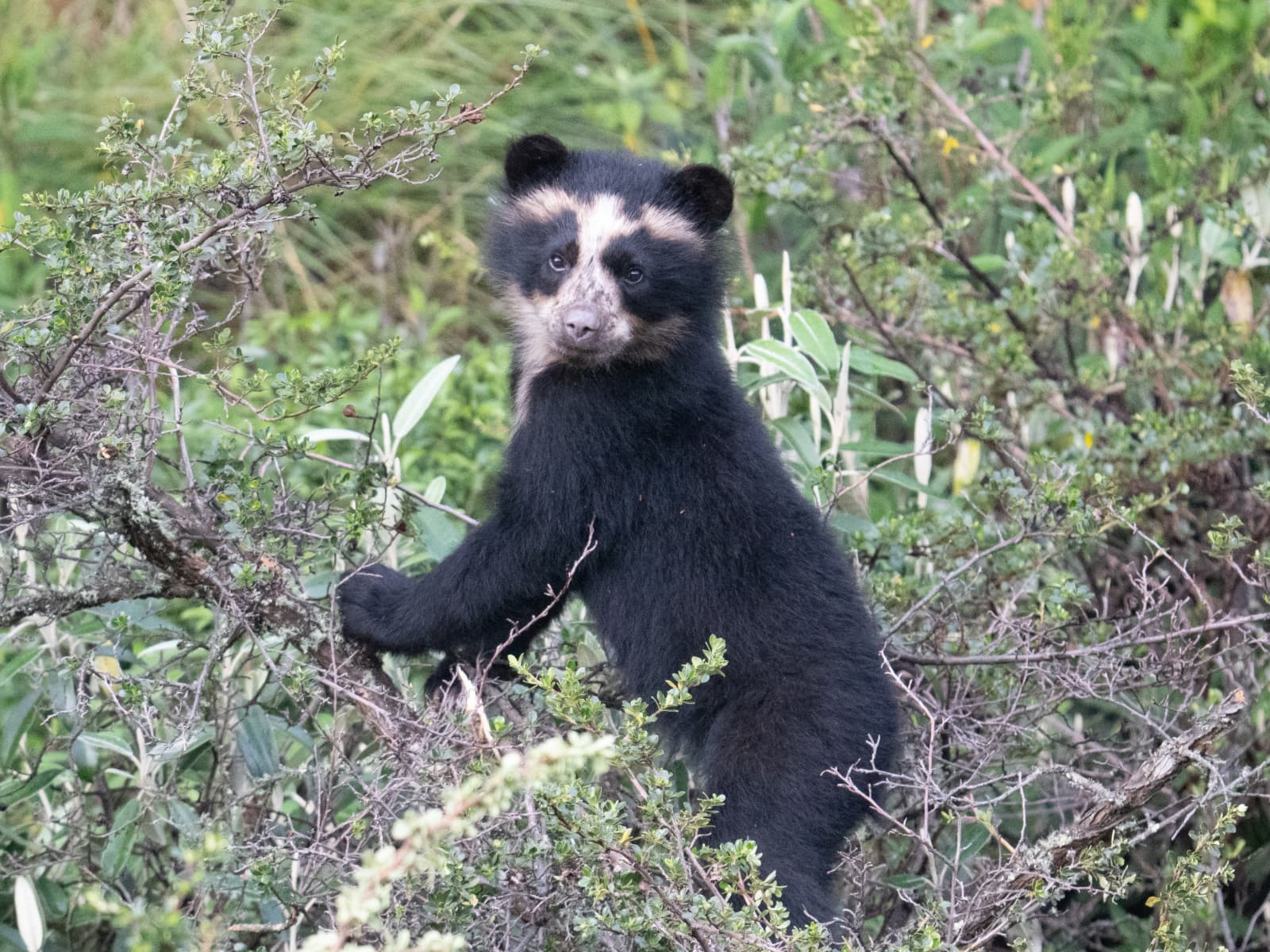
In Ecuador, bear habitat extends along the Andes and can include humid montane forest, cloud forest, forest edges, high-elevation shrublands and páramo. Food, season, disturbance and landscape connectivity influence movement.
The Andes Travel Guide helps place these habitats in a wider route, while the Ecuador Travel Guide helps compare them with other regions.
| Landscape | What it contributes | Planning caution |
|---|---|---|
| High Andes and páramo | Open scanning conditions and broader high-elevation wildlife context. | Weather, altitude, access and visibility can change quickly. |
| Cloud and montane forest | Dense, productive habitat with natural movement corridors. | Vegetation can make direct observation difficult even when bears are present. |
| Chocó Andino | A UNESCO-recognized landscape where the species forms part of the regional biodiversity story. | Do not treat Mindo or an ordinary Chocó trip as a guaranteed bear tour. |
| Protected-area edges | Potential habitat transitions and community conservation context. | Access rules, private property and sensitive locations must be respected. |
Use binoculars or a spotting scope. Never approach, surround or block an animal’s route.
Artificial food can change behavior, increase conflict and harm bears and nearby communities.
Small groups, quiet observation and limited time at a sighting reduce disturbance.
Avoid publishing exact locations in ways that encourage crowds, chasing or trespass.
Ask how the specialist uses current field information, manages distance, limits group size and responds when conditions are unsuitable. A credible operator should explain that sightings are not guaranteed and should never use feeding, baiting or pursuit.
Confirm the proposed duration, pickup and drop-off, transport, walking conditions, elevation, equipment, private or shared service, inclusions, cancellation terms and accessibility before payment. If you want broader research first, use the Nature in Ecuador guide or compare ideas in Best Things to Do in Ecuador.
These links have different responsibilities: national planning, regional conservation context and specialist field conversion.
Compare wildlife, regions and responsible itinerary choices without treating a general Andes trip as a bear tour.
Explore Wildlife PlanningRead how the species relates to the Chocó Andino biosphere landscape and official bear-corridor context.
Read the Regional GuideReview current field expertise, realistic logistics and a private specialist experience after completing your research.
Meet the SpecialistView the private bear experienceSpecies status and conservation facts should be checked against authoritative sources. Current access, field activity and route suitability must be confirmed separately near the travel date.
Last reviewed: October 2, 2026, by the Experience Ecuador editorial team.
They use connected Andean habitats including cloud forest, montane forest and páramo. Presence does not guarantee visibility.
Yes. Both names refer to Tremarctos ornatus, South America’s only living native bear.
No. Expertise improves preparation and route choice, not certainty.
No. It belongs to the wider Chocó Andino landscape but should not be marketed as a dependable sighting location.
Keep distance, remain quiet, use optics, never feed or bait, avoid blocking movement and protect exact locations.
Ask about route selection, distance, group size, inclusions, access, cancellation terms and the operator’s no-guarantee policy.
Use the national guide for research, then compare regions and consult a qualified specialist for current field conditions.